

Djemila Roman Ruins (UNESCO World Heritage Site)
The Djemila Roman Ruins are among the most impressive and beautifully preserved ancient sites in Algeria and are recognized as a UNESCO World Heritage Site. Set in a mountainous landscape in northern Algeria, Djemila offers a striking example of how Roman urban planning adapted to challenging terrain.
Formerly known as Cuicul, the city was founded during the Roman period and later developed into a flourishing cultural and commercial center.
Historical Significance
Djemila reflects the expansion of Roman civilization into North Africa and demonstrates how Roman engineers and architects adjusted their standard city design to fit a mountainous environment. The site provides valuable insight into Roman civic life, religion, and social organization over several centuries.
What to See
The ruins include well-preserved forums, temples, basilicas, arches, public baths, and residential areas. Visitors can also admire remarkable stone carvings and decorative details. One of the highlights of Djemila is its collection of mosaics, which are among the finest found in Roman North Africa.
Setting and Landscape
Djemila is located on a high plateau surrounded by hills and valleys, creating a dramatic and peaceful setting. The combination of ancient ruins and natural scenery makes the site especially appealing for photography and slow exploration.
Visitor Experience
Exploring Djemila feels like walking through a living historical landscape. The site is spacious and less crowded than many well-known Roman ruins, allowing visitors to move freely and absorb the atmosphere. It is ideal for history enthusiasts, cultural travelers, and UNESCO site collectors.
Practical Information
The site is accessible by road, often as part of a full-day excursion from nearby cities. Due to uneven surfaces and elevation changes, comfortable walking shoes are recommended. Visitors should also bring water and sun protection.
Why Visit
Djemila Roman Ruins offer a rare and authentic glimpse into Roman life in a mountainous North African setting. Its architectural beauty, historical depth, and serene surroundings make it one of Algeria’s most rewarding cultural destinations.
Other Articles
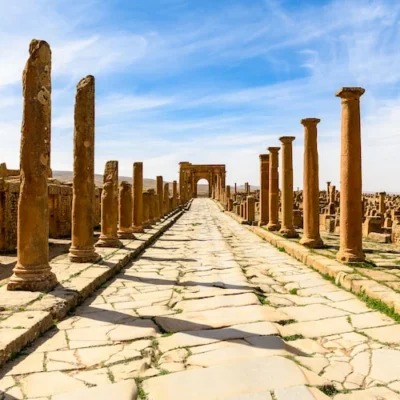
Timgad Roman Ruins (UNESCO World Heritage Site)


No Comment! Be the first one.